
(T)RÄUME
I began (T)Räume in the summer of 2026 as a response to an ongoing inner conflict: how can all the subjects that occupy my mind coexist within a single body of work? Beauty and social critique, commerce and artistic freedom, nature and destruction, longing and desire, dreams and reality.
Rather than separating these opposing forces, I wanted to create a space in which they could exist simultaneously.
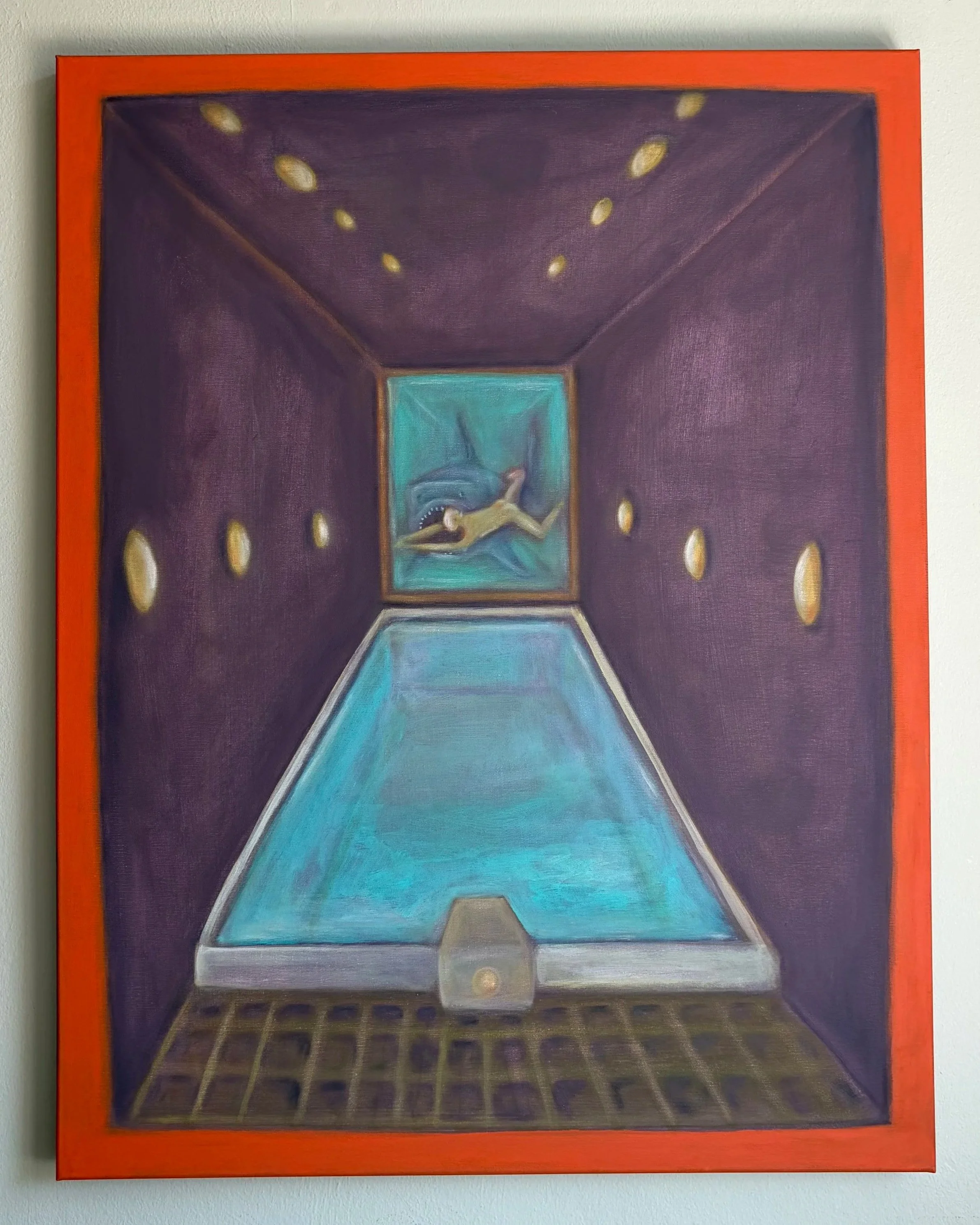
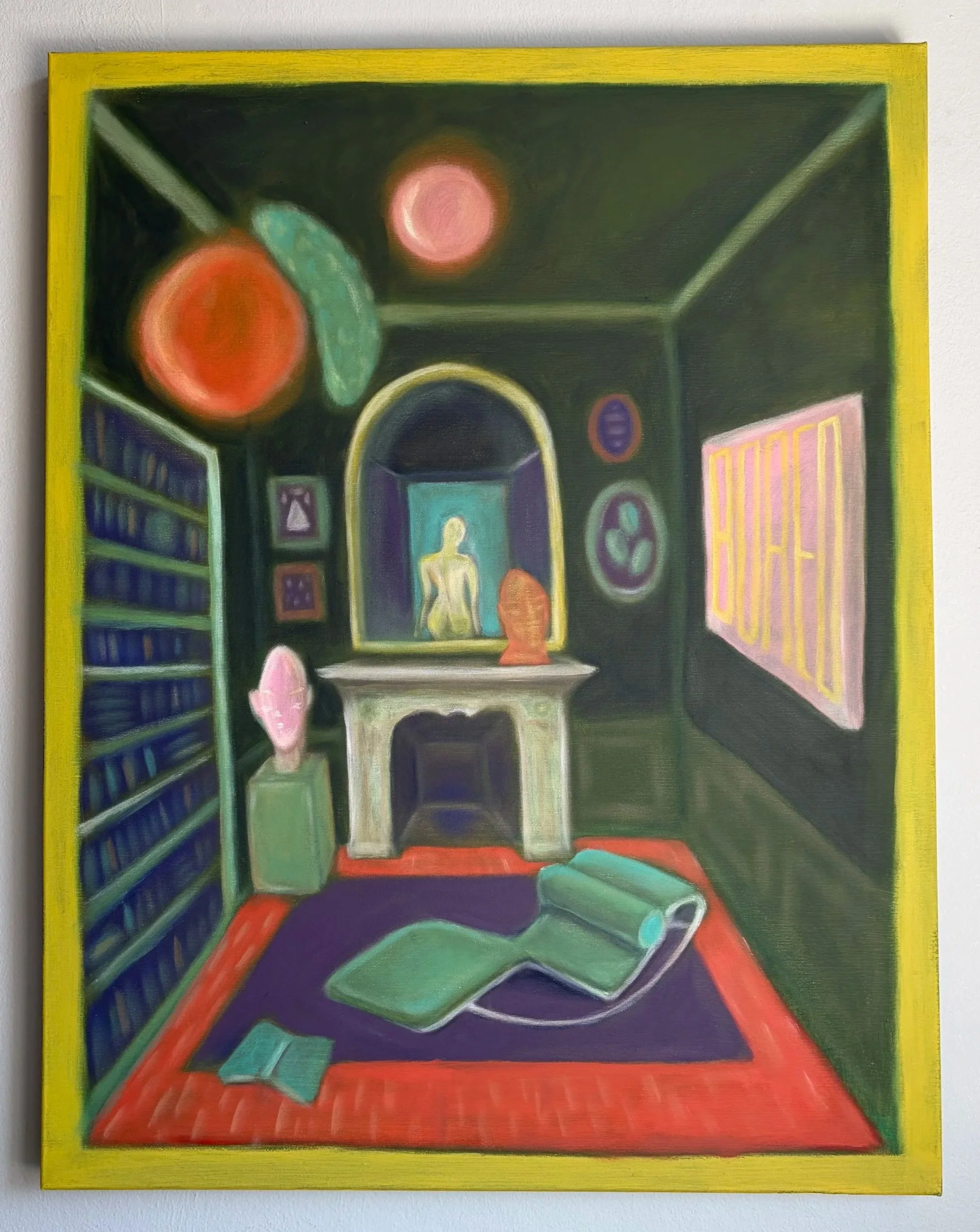
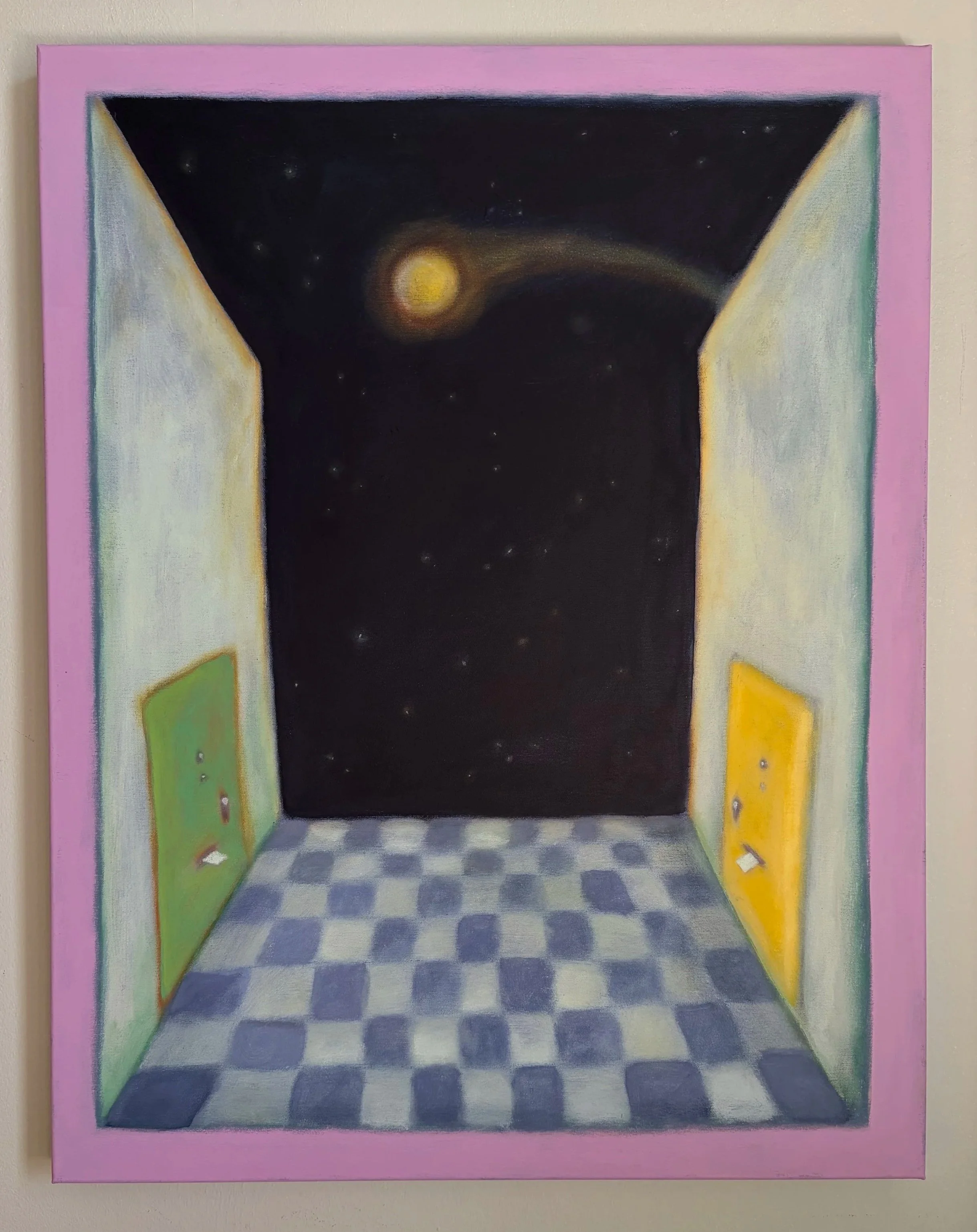
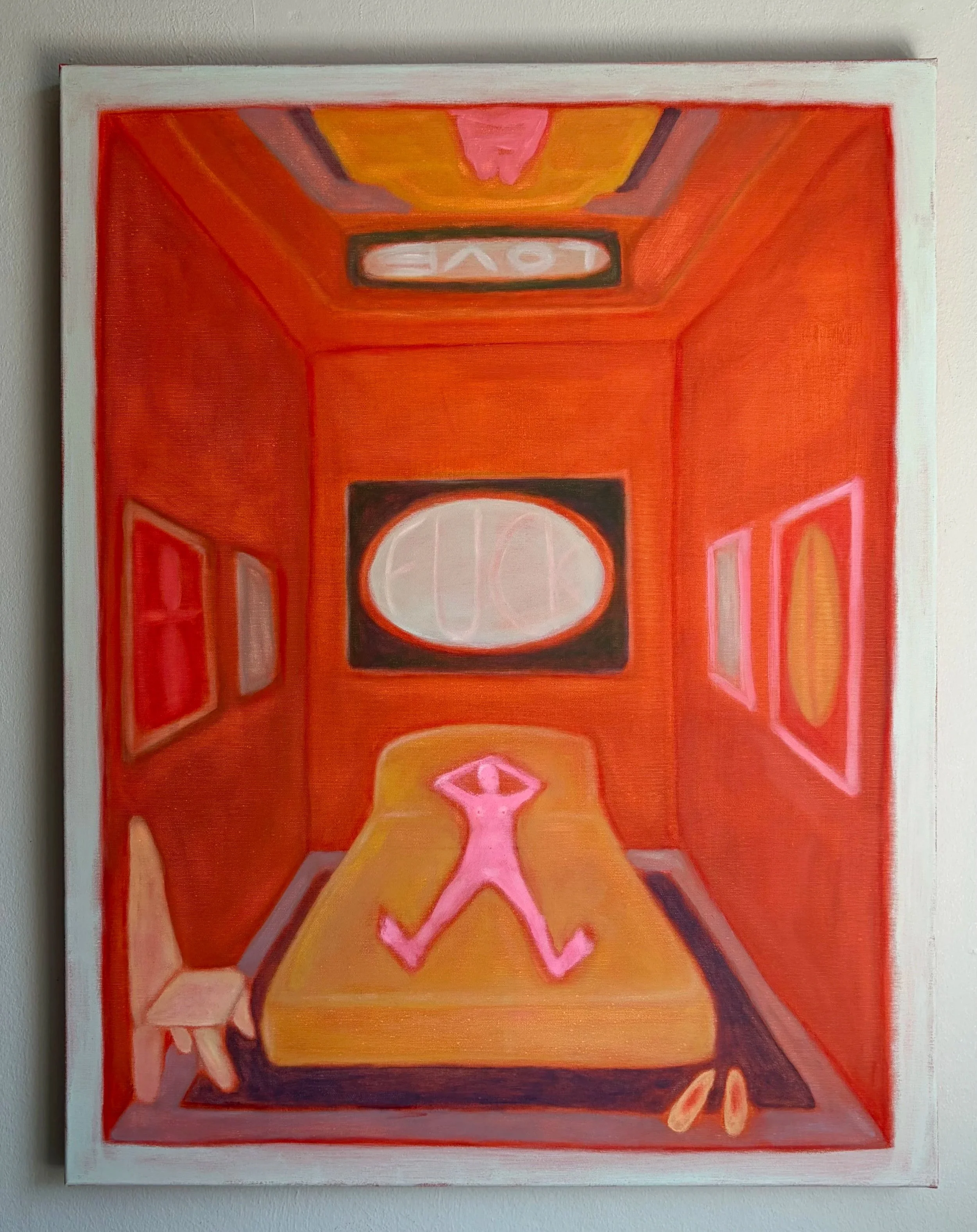
For a long time, I felt that my previous works required me to narrow my focus, leaving little room for the complexity and contradictions that shape both everyday life and my inner world. (T)Räume is my attempt to overcome these limitations.
Each painting depicts an imagined interior constructed through a three-dimensional perspective. These rooms become surreal stages where dreams, memories, symbols, desires, observations, and social commentary can meet. A bold coloured frame defines the architecture of each scene, while every individual painting functions as one room within a much larger structure.
As the series continues to grow, the works can be assembled into the view of a doll's house. A symbolic architecture in which every room holds a different narrative, yet all belong to the same emotional and conceptual home.
ON VIEW IN COPENHAGEN : ENTER ART FAIR x NEUDEUTSCH ART * 27 - 30 August 2026
ON VIEW IN COPENHAGEN : ENTER ART FAIR x NEUDEUTSCH ART * 27 - 30 August 2026
Bored
70 × 90 cm
Acrylic & Pastels on Canvas
Berlin, 2026
Mirror
70 × 90 cm
Acrylic & Pastels on Canvas
Berlin, 2026
Airmail
70 × 90 cm
Acrylic & Pastels on Canvas
Berlin, 2026
Pool
70 × 90 cm
Acrylic & Pastels on Canvas
Berlin, 2026
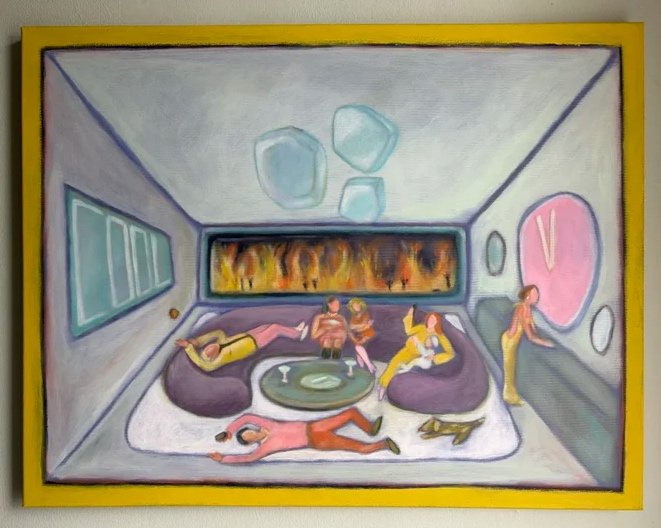
Still cool
90 × 70 cm
Acrylic & Pastels on Canvas
Berlin, 2026
From Our Mothers Garden
ON VIEW IN COPENHAGEN : ENTER ART FAIR x NEUDEUTSCH ART * 27 - 30 August 2026
ON VIEW IN COPENHAGEN : ENTER ART FAIR x NEUDEUTSCH ART * 27 - 30 August 2026
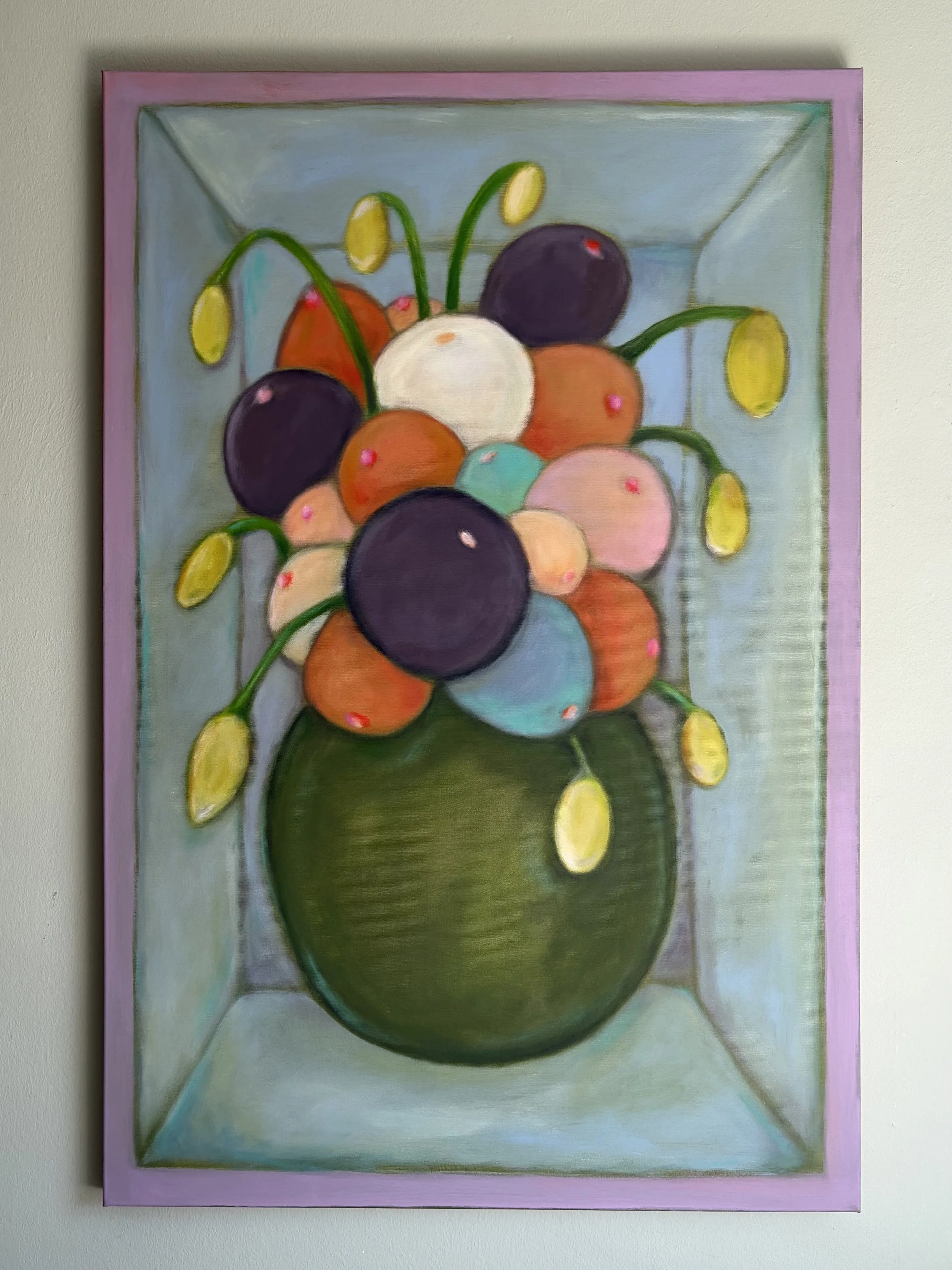
From Our Mothers Garden
80 x 120 cm
Acrylic & Pastels on Canvas
Berlin, 2026